

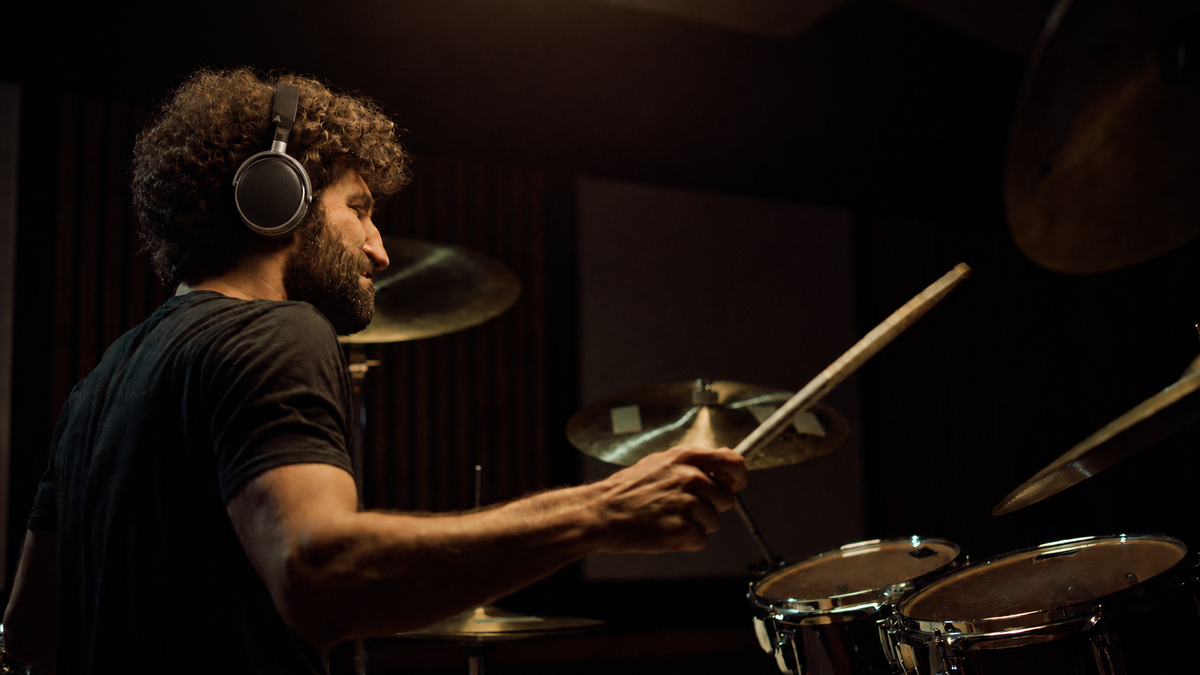
TL;DR: BeatBuddy sounds realistic because it uses real recordings and smart engineering to emulate the behavior and sound of a drummer.
Put on a pop track from the '80s, and you’ll hear the drum machine right away. Every snare hit sounds identical. Every hi-hat lands exactly on the grid right where it was programmed to. It certainly has its charm, but nobody would mistake it for being a real person playing a kit.
BeatBuddy was designed around a different goal: sound like a drummer, not a drum machine. Here's what goes into that, and why it matters when you're playing along.
1. Every hit is a unique recording
Even the world's greatest drummers never strike a drum the same way twice. Variations in volume, timbre, and decay are what give drumbeats their energy and character. Traditional drum machines loop a single recording, which gives it a more robotic sound.
BeatBuddy fixes this by using multiple unique recordings for every drum in every kit, captured across the full dynamic range from a light tap to a rimshot. Every beat you hear is the actual acoustic response of a real drummer playing a drum.

2. Round-robin sampling makes fast hits sound natural
Compare a snare drummer playing sixteenth notes versus a producer tapping a single snare sample on a pad. On a standard sampler, rapid hits sound robotic and disconnected. The same exact recording is played over and over for every note. Real drums don’t work that way. Each hit sounds different, and this is part of what makes it sound human.
BeatBuddy solves this by using round-robin sample selection, cycling through different recordings for every hit. No two consecutive notes are identical, so the rhythm sounds cohesive and natural. This is especially important for cymbals, where a long decay needs to blend seamlessly into the next strike.
3. Imperfections are the secret to getting in the groove
As many musicians know, having a good sense of rhythm doesn't necessarily mean playing like a metronome. Sticking perfectly to a grid can sound rigid and cold, especially in blues, jazz, or swing, where the feel comes from playing slightly ahead of or behind the beat.
BeatBuddy's beats aren't perfectly quantized. They keep the tiny timing variations you'd hear in a live performance, preserving what musicians call "the pocket." That natural push and pull is what makes a groove flow with the music rather than click along mechanically.

4. Accents and ghost notes give a beat its flavor
Dynamics are the secret sauce that turn an average performance into a great one. They're also the key to making BeatBuddy patterns sound live. Accents and ghost notes are the salt and pepper of drumming: without them, a rhythm loses its flavor. By varying the intensity of each hit, a drummer creates movement within a measure and defines the feel of a groove.
Every hit in a BeatBuddy pattern has its own velocity. Instead of flat, full-volume strikes, patterns are programmed with nuanced intensity levels. This is especially clear in the Beat Boutique library, where beats capture the exact touch and signature dynamics of iconic drummers.

5. Built by people, not AI
BeatBuddy’s content was not created with AI. The firmware and algorithms were designed by human software engineers. Every sound was recorded by a real drummer and mixed by a professional audio engineer in a real studio. That's exactly why the resulting product sounds so dang good: it's designed by musicians, for musicians.

Leave a comment
All comments are moderated before being published.
This site is protected by hCaptcha and the hCaptcha Privacy Policy and Terms of Service apply.